
Ekadashi: Fasting or a Short Cleanse Without Religion
Observing Ekadashi in a secular, non-religious, or broadly spiritual way is an excellent tool for a regular body-and-mind detox: it gives the digestive system a much-needed rest and creates space for mental clarity. In the traditional understanding, Ekadashi (the 11th day following the new moon and full moon) is considered an energetically potent time — one when the body’s resources can be redirected away from processing heavy food and toward inner renewal. Below is a universal, step-by-step guide that fits easily into everyday life, regardless of your religious or philosophical views.
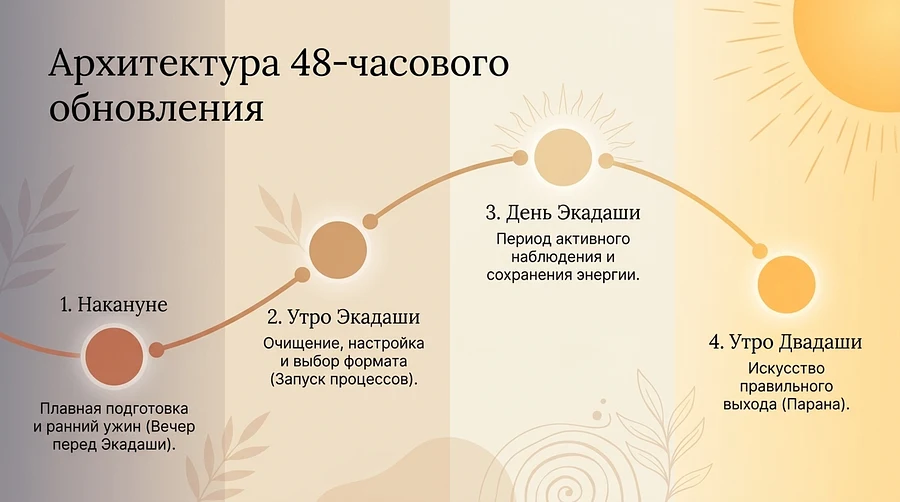
Preparing for the Ekadashi Fast
The evening before (the night before Ekadashi)
The goal of this stage is to ease the body into restriction gradually, so that you wake up on Ekadashi feeling clear rather than depleted or headachy.
Dinner should be light and early — ideally finished by 6–7 pm.
- What to avoid: heavy, fatty, or fried food; an excess of spices; animal protein (meat, fish, eggs); and alcohol. If you are planning a strict fast, consider dropping grains and legumes at dinner as well.
- What to eat: steamed or roasted vegetables, a light vegetable soup, or a simple salad with a minimal amount of oil.
- Why it matters: giving the digestive system time to complete its cycle before you sleep means your body will enter Ekadashi already in a cleansing mode — not still working through last night’s dinner.
What to Do on Ekadashi Morning
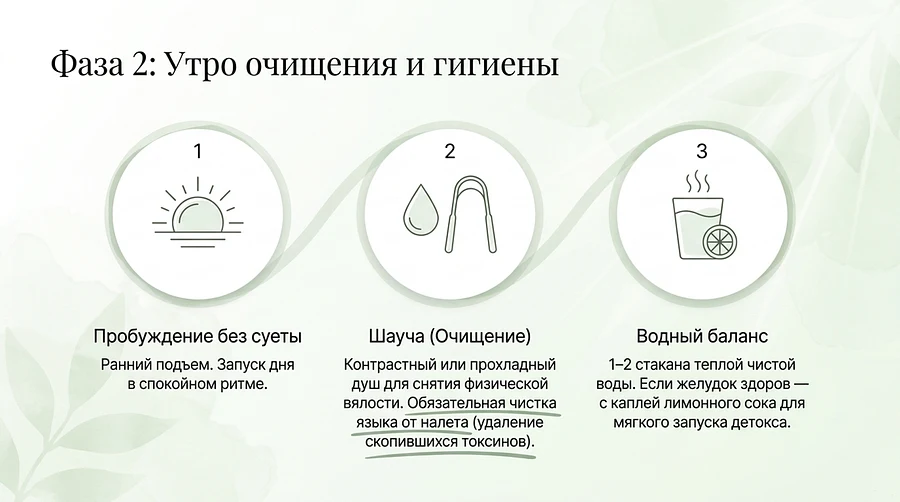
Ekadashi morning
The time for setting the tone of the mind and activating the body’s cleansing processes.
Wake up: try rising a little earlier than usual so the morning unfolds without rush.
Physical cleansing: take a cool or contrast shower. It will wash away morning sluggishness and help you feel alert. Brush your teeth and scrape your tongue to clear any residue.
Hydration: drink one or two glasses of warm water (you can add a few drops of lemon juice if your stomach tolerates it well). This gently activates the detox process.
Choosing Your Format: decide clearly which level of restriction you are taking on today:
- Full fast — water only, or a dry fast. For experienced practitioners only.
- Liquid fast — water, herbal teas, and freshly pressed juices.
- Light eating — grains, legumes, meat, and alcohol are avoided; fruits, vegetables, nuts, and dairy are permitted.
Setting an intention (Mental Start): sit quietly for 5–10 minutes. Formulate a bhavana — an intention — for the day. For example: “Today I dedicate this day to cleansing my body and calming my mind. I practise awareness and kindness.”
What to Do During the Day
Ekadashi day
A period of mindful observation and energy conservation.
Food (if you chose the light eating option): eat small portions. Roasted pumpkin or courgette, fruit (apples, bananas), a small handful of almonds or walnuts — all work well. The key is not to overeat, even with permitted foods.
Activities: carry on with your usual tasks, but try to avoid intense physical exertion and stressful situations.
Mental hygiene / “Digital detox”: where possible, step away from aimless social media scrolling and news consumption. Replace these with something nourishing — a good book, a podcast, or time in nature.
Speech and emotional awareness: Ekadashi is also a day of mental fasting. Do your best to stay out of gossip and arguments, and avoid displaying aggression or irritability. If you feel yourself getting wound up, take 5 slow, deep breaths.
Physical signals: a headache is a common detox response. If it arises, drink warm water, take a gentle walk outside, or do some light stretching.
The Evening of Ekadashi
Winding down and reflecting.
Closing the day: spend the evening in a calm environment. Avoid heavy films and intense screen work before bed.
Reflection: before sleep, spend 10 minutes on a gratitude practice. Think about what went well today, and acknowledge yourself for showing up.
Sleep: go to bed early — by 10–11 pm. During a fast, the body needs quality rest to repair and restore tissue.
Breaking the Ekadashi Fast
The following morning — Dvadashi — the breaking of restrictions (known in tradition as parana) is a crucial step. Jumping straight into heavy food will cancel the detox effect and put unnecessary strain on the body.
Timing: traditionally, the fast is broken within the first few hours after sunrise.
A Step-by-Step Guide to Breaking the Fast:
- Water: immediately after waking and your morning hygiene routine, drink a glass of warm water. If you observed a dry fast, start with a few small sips — you may add a pinch of good-quality salt and a drop of lemon juice to help restore electrolyte balance.
- A symbolic first bite (if you fasted strictly): eat something you abstained from. A small piece of wholegrain crispbread, a fruit (a banana is ideal, as it coats and soothes the stomach), or a spoonful of plain porridge.
- A proper first meal (30–40 minutes after the water and/or fruit):
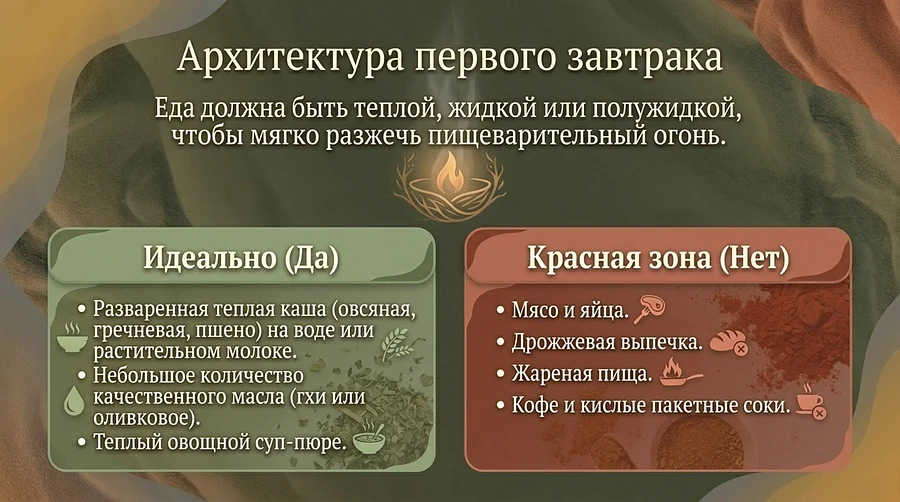
Food should be warm, soft or semi-liquid, and easy to digest.
Best choice: a well-cooked porridge — oats, buckwheat, or millet — made with water or plant milk and a little oil (olive oil or ghee). A warm blended vegetable soup is also an excellent option.
What to avoid: meat, eggs, yeasted baked goods, anything fried, coffee, and acidic packaged juices should not appear at your first meal after a fast.
The Day After Ekadashi
The following day: throughout Dvadashi, return to your normal diet gradually. Give your stomach time to readjust — keep portions moderate and avoid overloading it.
What is the point of this day for anyone?
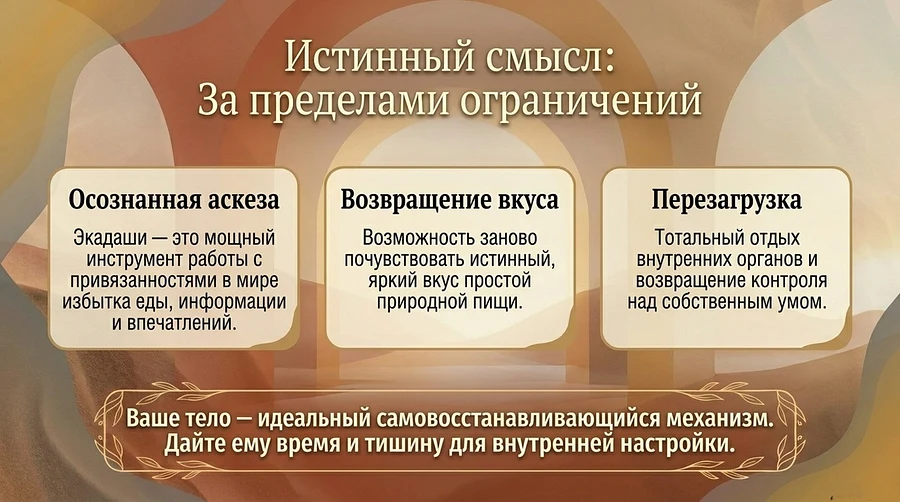
The meaning of Ekadashi beyond religion is the practice of conscious self-restraint — tapas, or voluntary simplicity. In a world of relentless overconsumption — of food, information, and stimulation — this kind of day offers a genuine reset: it recalibrates dopamine receptors, reawakens appreciation for simple food, gives the internal organs a rest, and returns a sense of agency over one’s own desires and mind.
Related Posts

Lunar calendar: November 2025
Favorable days of November Retrograde transits of Jupiter and Mercury Venus in full force…

Saturn Transit 2026 for Aquarians
Hello, dear Aquarians! I am concluding a series of articles on the influence…

The altar in the house is a sacred place in space
Dear friends! Over the past few months, there have been no leaves from one…